Topic
3D concrete printing in practice: FCE BUT students exceled during international internship in France

Technology of 3D printing in construction is attracting increasing attention from both experts and the public. It offers faster construction, more efficient use of recycled materials, and the potential to reduce the environmental impact of construction. These were the very topics addressed by the international educational course “Print to Build: Explore 3D Concrete Innovation”, implemented as a Blended Intensive Program (BIP) under the Erasmus+ program.
Four students from the FCE BUT also participated in the program: Markéta Kořínková, Tomáš Kostka, Ondřej Kotačka, and Vojtěch Rudický. The course was academically coordinated by the French institution ESTP in collaboration with Polytech Orléans. In addition to FCE BUT, the following universities were also involved in the project Technische Universität Braunschweig from Germany and West Pomeranian University of Technology from Poland.
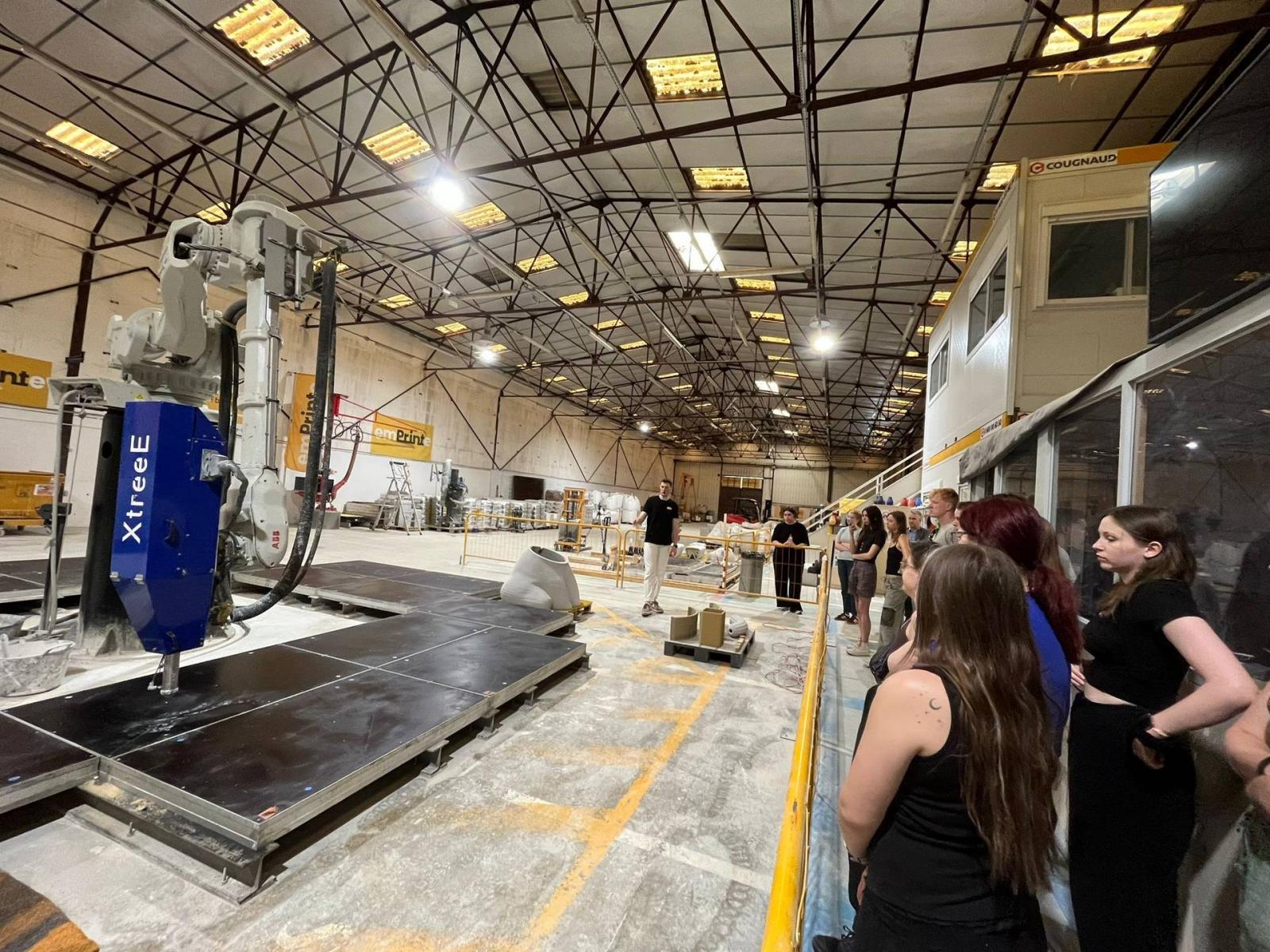
The program combined online preparation with a two-week in-person session in France. Students spent the first week receiving theoretical training on the ESTP campus in Cachan near Paris, and the second week in the laboratories at Polytech Orléans. The program also included visits to local landmarks and a tour of emPrinte, a company specializing in 3D printing technologies.
From Mix Design to 3D Printing
The course was based on a close integration of theory and practice. Students worked in international teams and went through the entire design process: from developing the concrete mix to manufacturing the final product using a robotic arm.
The main task was to design a concrete mix with the lowest possible environmental impact and then use it to create the tallest possible column that meets the required strength parameters. “The students learned to replace traditional cement with eco-friendly alternatives and also worked with recycled materials such as concrete dust or ash from coal-fired power plants. The project also included evaluating the carbon footprint and assessing the material’s life cycle,” explains Libor Topolář from the Institute of Physics at FCE BUT, who accompanied the students on the internship.
In the laboratories, the students then designed print paths, simulated the movements of a robotic arm, and finally printed self-supporting concrete pillars. The shape did not serve merely an aesthetic function—the undulations in the walls characteristic of 3D printing also served as structural reinforcement.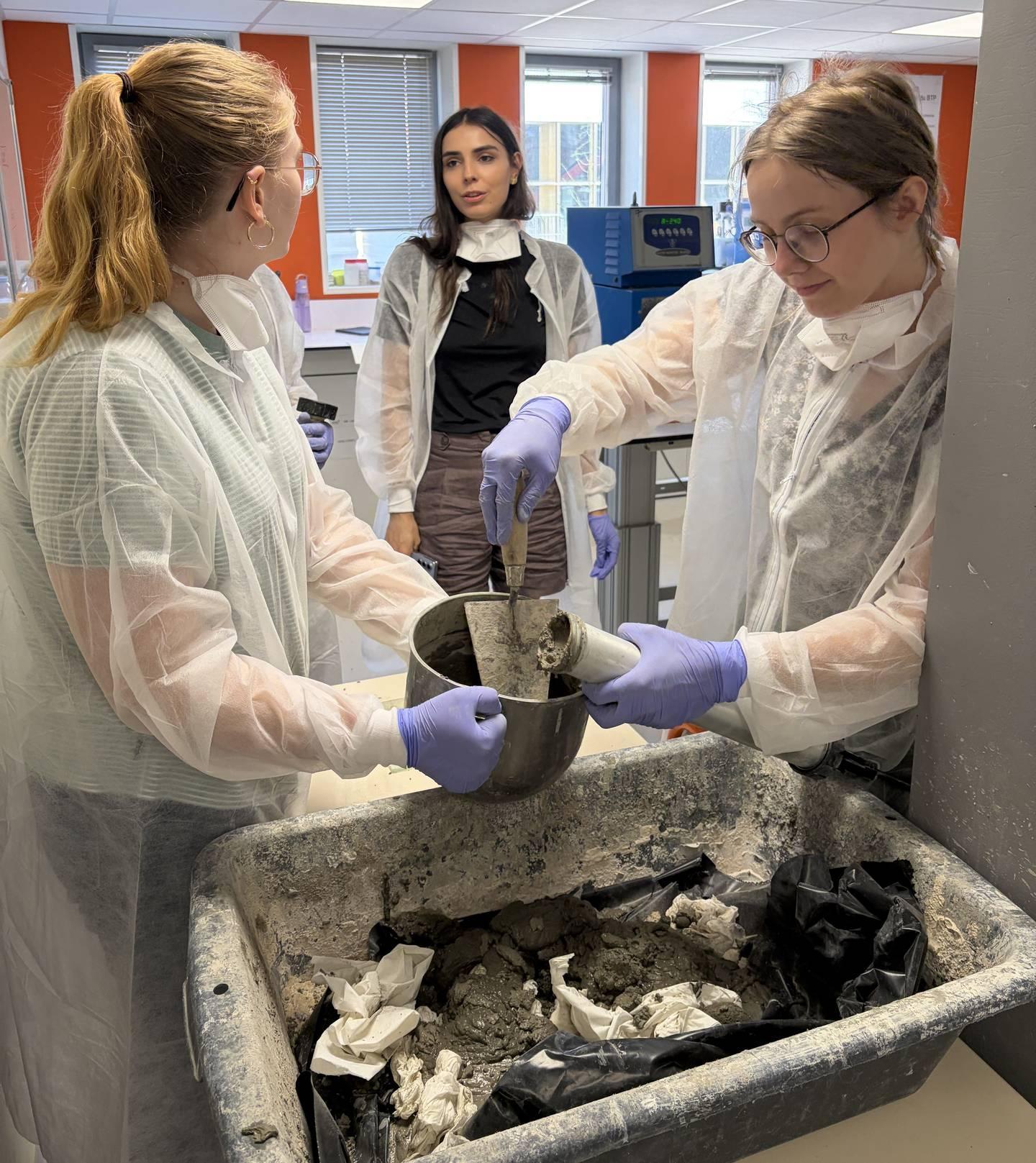
Less Cement, More Recycling
One of the students who participated in the program was Vojtěch Rudický a first-year student in the master’s program in Environmentally Advanced Buildings. His team succeeded in most significantly reducing the carbon footprint and thus minimizing the environmental impact. “The assignment led us to reduce the amount of cement by up to half,” says Rudický.
When designing the mixture, the team used, among other things, recycled concrete dust. According to him, it was not only the properties of the materials used that played an important role, but also their availability. “The environmental impact isn’t just about production itself. You also have to think about where the materials come from and whether they have to be transported halfway across Europe,” he adds.
He considers one of the technology’s greatest advantages to be the ability to optimize the material for a specific application. “When we know what load we want to achieve, we can design a custom concrete mix,” he explains. In addition to the environmental benefits, he also sees potential in the very construction method itself. “The advantage of 3D printing is that there are practically no shape limitations. You can create almost any geometry; for example, we created a star-shaped column. Moreover, part of the human factor is eliminated—people simply monitor the entire process,” adds Rudický.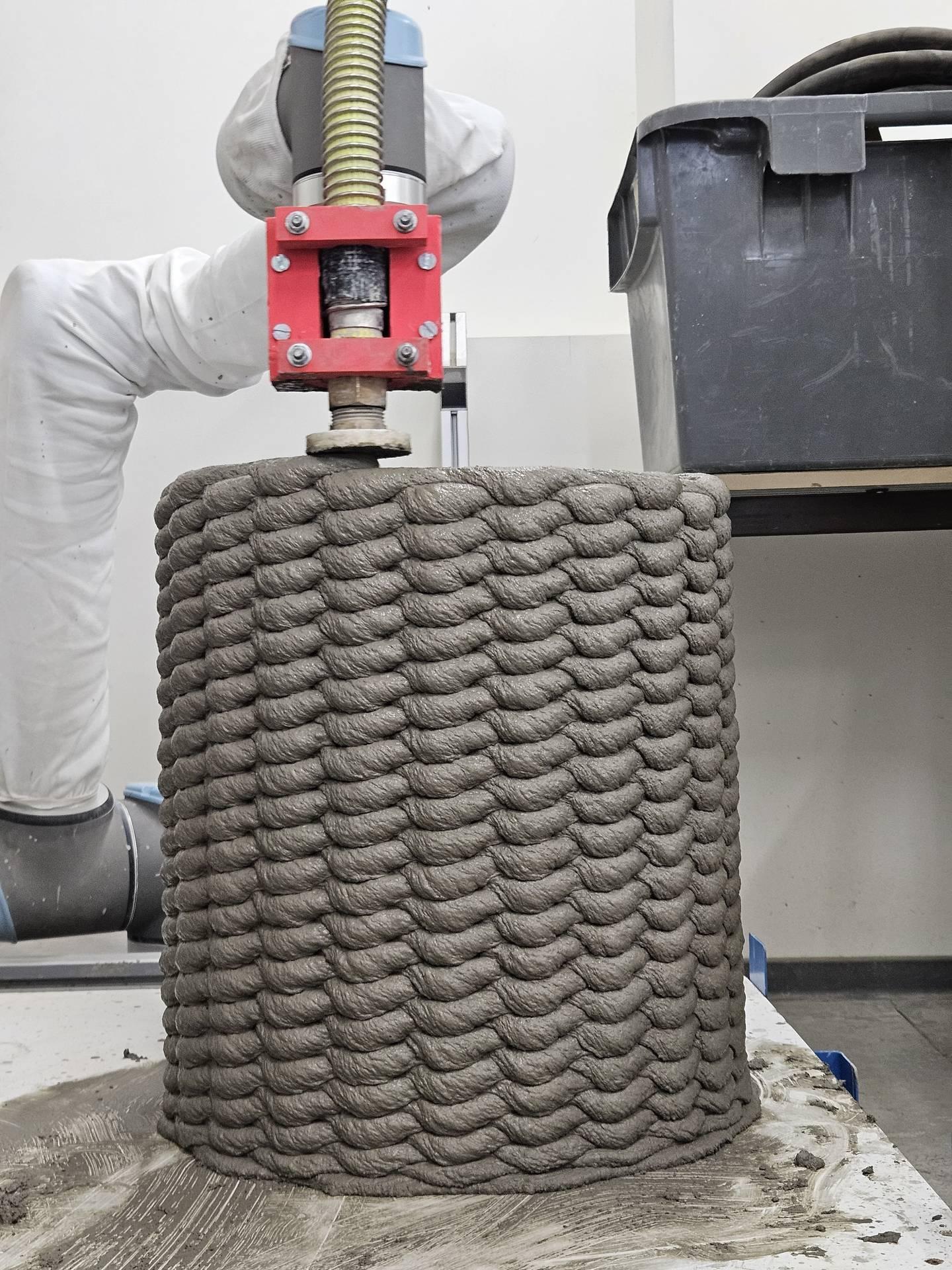
The basketweave pattern that caught the jury’s attention
Also participating in the program was Markéta Kořínková, a third-year student in the Bachelor’s program in Architecture of Building Construction. Until now, she had focused primarily on building modeling. The internship allowed her to better understand material-related aspects as well. “At school, we spend a lot of time on theory and the aesthetic aspects of buildings. While designing the material, I came to understand what properties the mixture must have. It broadened my horizons,” she explains.
Markéta’s team’s result most impressed the expert jury from an aesthetic standpoint. “The print head’s path moved in waves, so the resulting surface resembled a woven basket. It wasn’t easy, because the individual layers don’t always adhere well to each other. In the end, though, we managed to print the design successfully,” explains Kořínková.
However, she considers the opportunity to network and gain insight into how things work abroad to be the greatest benefit. “I spent most of my time discussing with instructors and making contacts. This could be important for future internships or collaborations,” she says.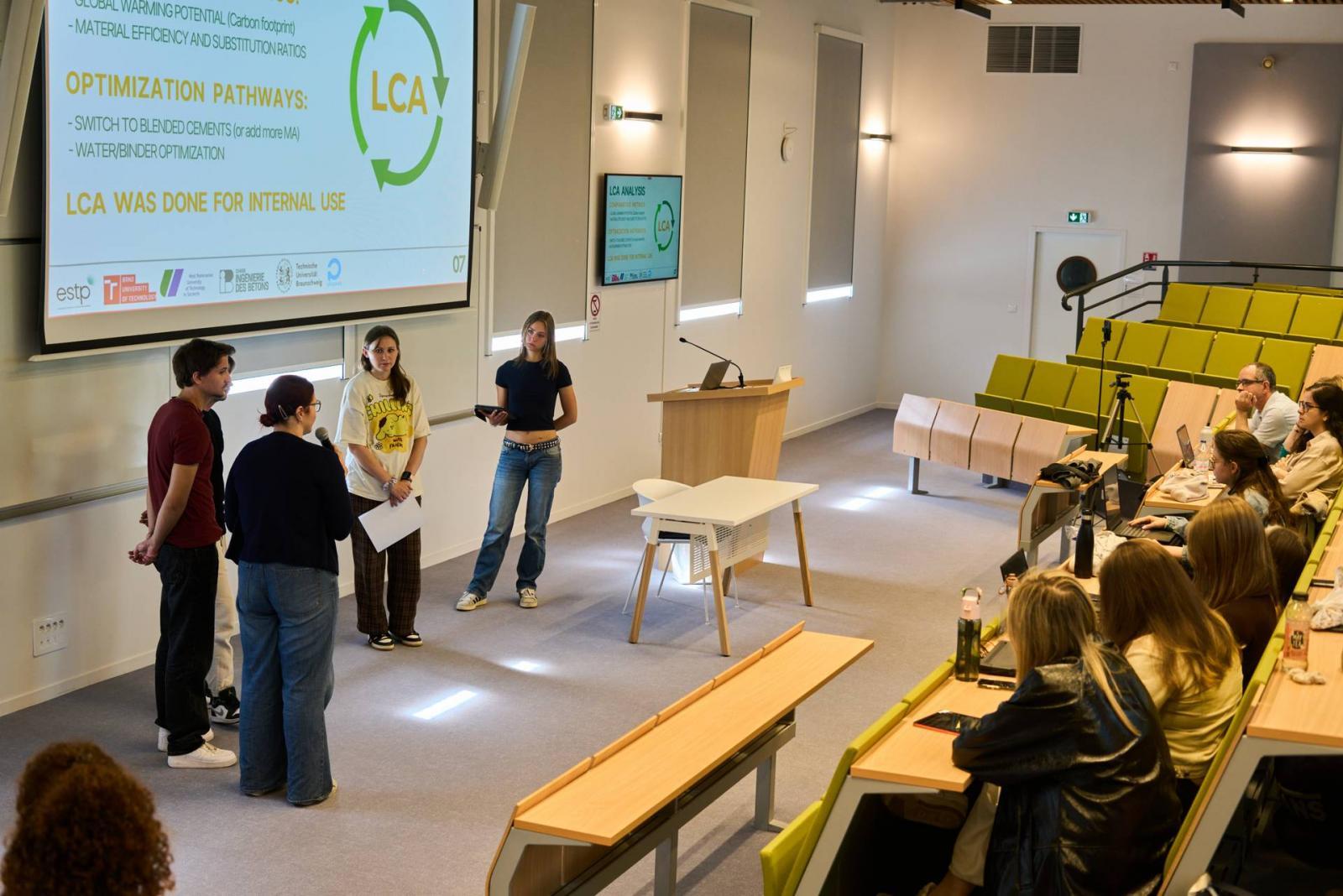
Benefits for Students and the Faculty
In addition to experience working in international teams, presenting technical solutions in English, and new professional contacts, students brought back from France, above all, tangible knowledge of technology that could fundamentally transform the construction industry in the future.
“The awards and praise received from our French colleagues confirm that the curriculum at the FCE BUT keeps pace with the latest European trends,” says Libor Topolář.
The internship also made an indisputable contribution to the faculty as a whole. “The experience in the field of robotic 3D printing and advanced diagnostics that the students brought back from France should be immediately integrated into our study programs. This will significantly strengthen the link between research and teaching,” he concludes. 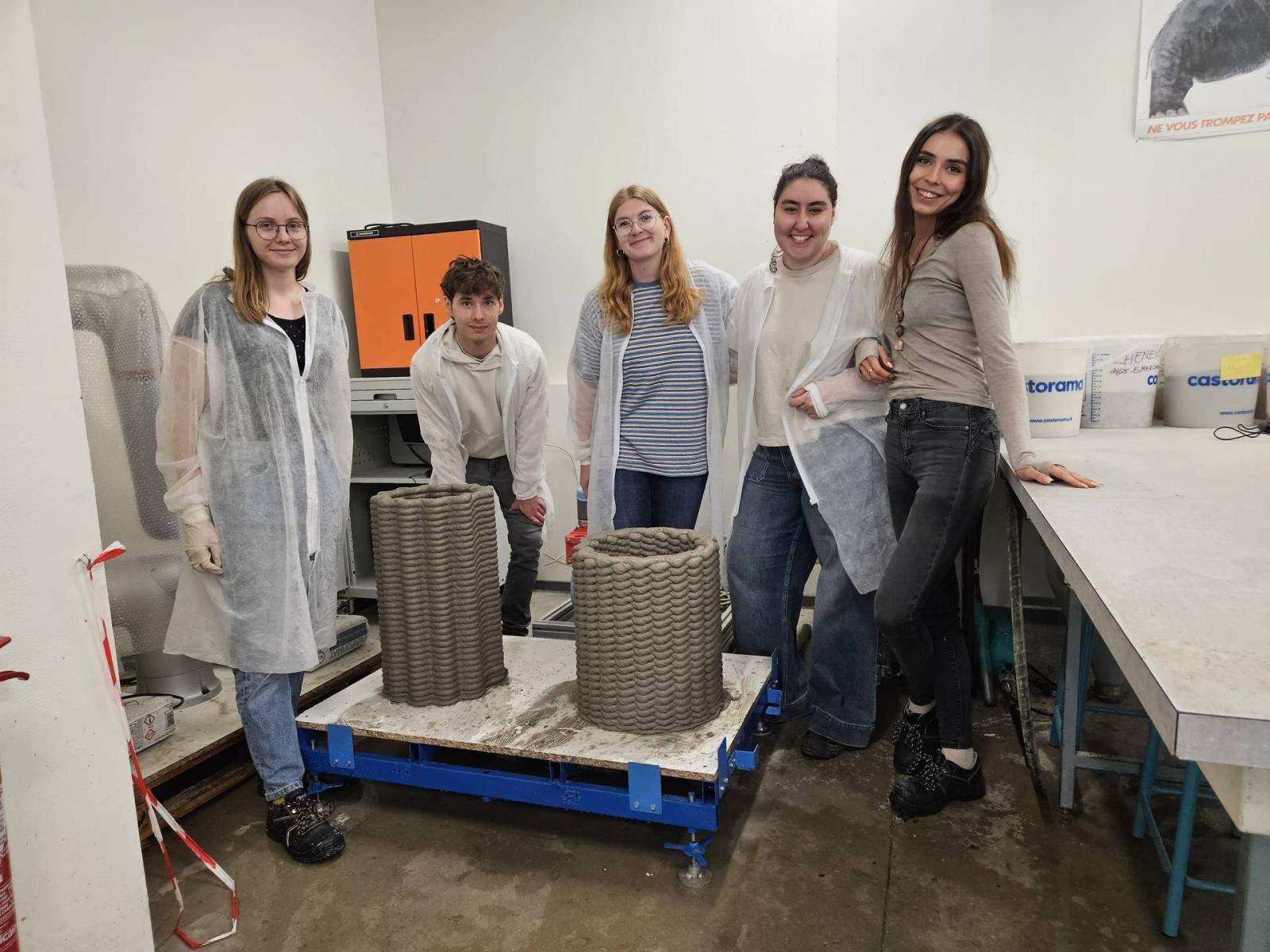
Source: FCE BUT
Water losses in the Czech Republic reach 15 percent, the situation is getting better every year
Soil erosion will be prevented by strip crop rotation technology
Sustainable energy projects are not a luxury. They can save and make money
BUT experts address climate challenges, floods, and the future of Czech water
A frog in his coat of arms: The exceptional life of Sir Frank Lampl, Brno native and BUT civil engineer