Ideas and discoveries
Award-winning Volteek project offers a modular battery management system developed through a student formula

Volteek offers a modular system for monitoring, management, and advanced diagnostics of energy storage with a wide input voltage range. Created by current and former BUT students, the project is designed primarily for battery storage manufacturers who want to ensure modularity for their systems while preparing for the future. Volteek is already working with its first customers to launch its products on the market, aiming to do so by the end of this year. Recently, the project received shared first place in the BUT Student Entrepreneurship Award competition for its innovative business idea.
The student formula project and the development of the first electric formula car brought together four BUT students. Their work included designing their own battery system for the formula, as no suitable solution was available on the market at the time. Gradually, as they moved on from the student formula project, they began to realise the unique expertise they had gained. “We realised that what we developed had commercial potential. So, we modified the original system and redesigned it to be suitable for commercial use. That’s how Volteek came about,” explains Dominik Klement, one of the founders.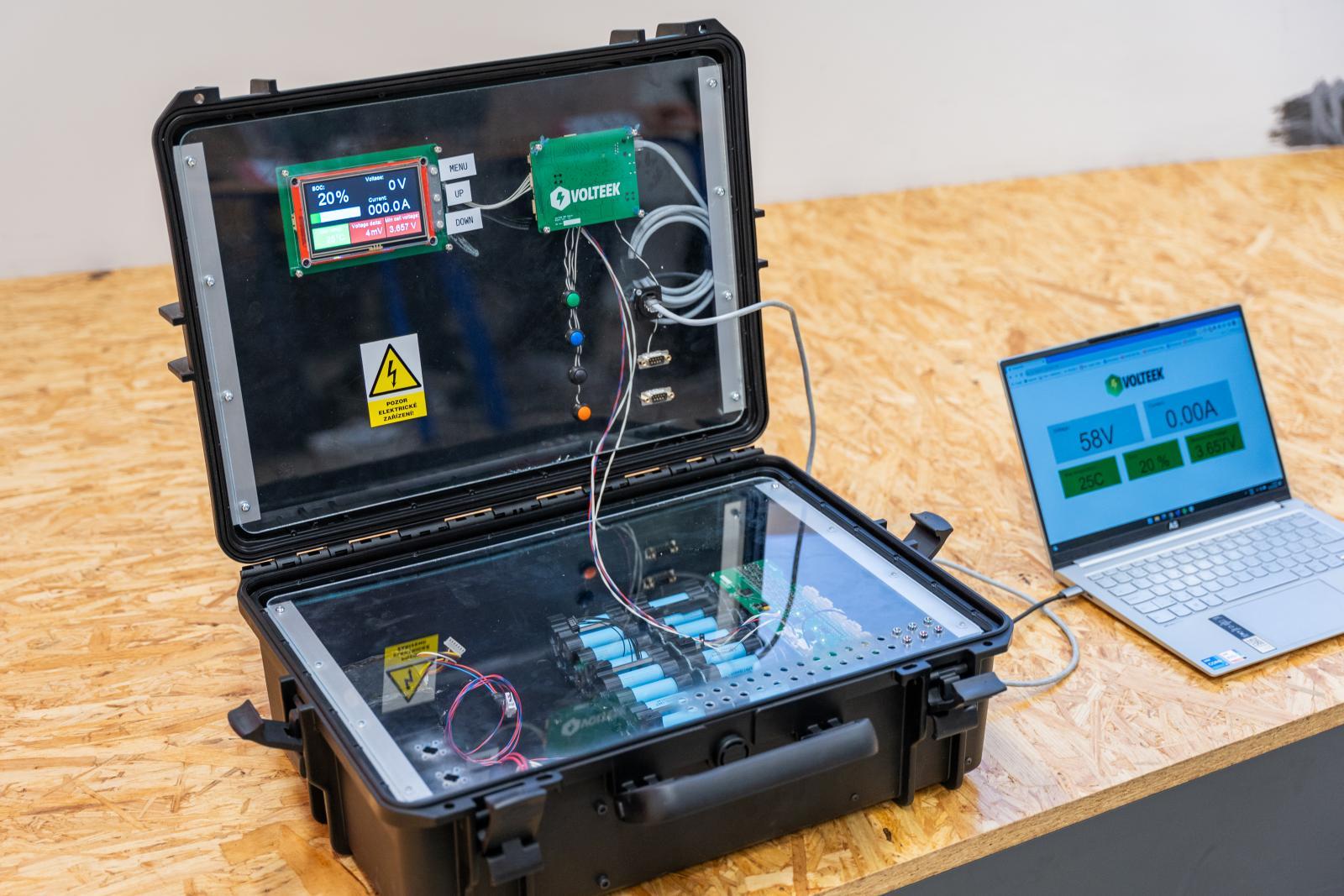
The core idea was to create a modular battery management system capable of handling a wide range of applications. Thanks to its versatility, it can be used in industrial settings, such as large-scale battery storage systems in factories, as well as in mobile applications. “We don’t want to limit ourselves to battery solutions. We would like to participate in various projects, including those in electromobility,” adds Klement.
Their solution ensures efficient operation of modern batteries and monitors their use within acceptable parameters, preventing unnecessary damage to the batteries.
The modular solution by Volteek enables quick and easy integration into existing systems. “In our case, modularity means we’ve designed a set of units, each with its own function, which is sufficiently universal. By combining and connecting these control units in different ways, we can manage batteries. This approach achieves system versatility. We have a few key base units that are flexible enough so that we don’t have to make hardware modifications for each customer, but instead, only minor software adjustments if necessary,” Klement clarifies.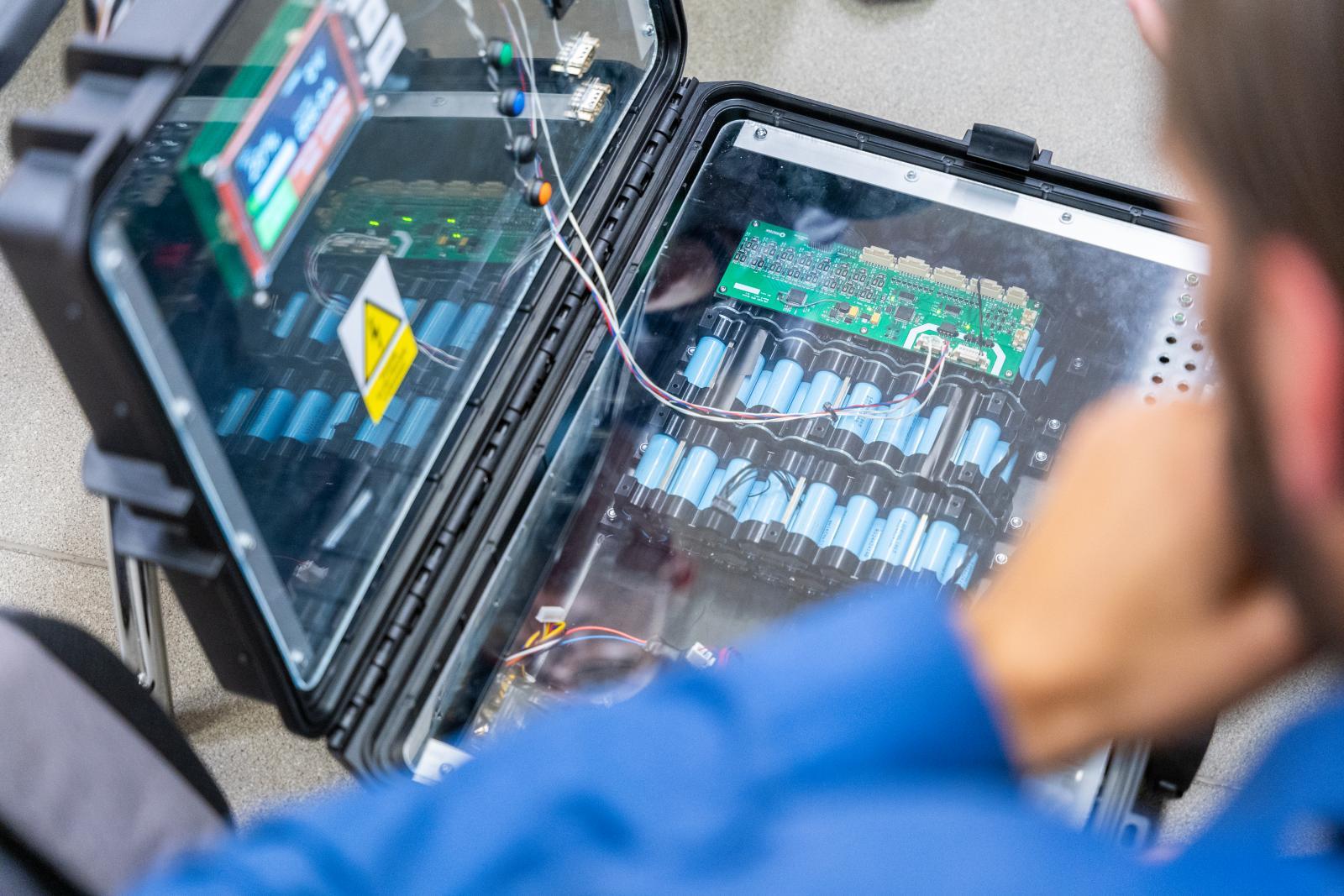
In addition, they aimed to achieve a high-voltage architecture in their solution. “There’s a growing demand for higher output power. Each unit in the battery system, which can be connected in series or parallel, can handle high voltage. This allows the final implementation to operate with greater overall efficiency,” notes Klement.
According to Klement, their customers are not, for example, individuals who have installed photovoltaics at home or own an electric car. “We’re targeting battery storage manufacturers who want to ensure modularity for their systems. They also want to prepare for the future with our high-voltage solution, ensuring their storage systems remain usable and safe,” he adds.
Currently, Volteek’s system is developed and operational. The company is already collaborating with its first commercial customer, aiming to bring their joint solution to market this year. “Upcoming legislative changes related to community energy present an opportunity we’d like to seize, so we aim to have our battery systems in full operation this year,” explains Klement. Together with their business partner, they are working on features like remote battery management. “This will be critical because the batteries will be large and located far from service technicians. Remote management will enable monitoring and control from a central hub,” he adds. Meanwhile, the Volteek team is working on additional projects to broaden their scope.
For their innovative business idea and the project’s progress so far, the founders recently earned shared first place in the BUT Student Entrepreneurship Award competition (in Czech language).


A student from BUT founds OMG Robotics and changes the way computer science is taught in Czech schools
Spacetime navigation: doctoral research from FEEC BUT introduces an innovative approach to spatial function estimation
Greater efficiency and completely new applications. Experts from FEEC BUT also collaborate on satellites for very low orbit
From scripts to autonomous flight: Jakub Prvý talks about studying, drones, and leading a student team
Summer research programme at BUT inspired American students to pursue PhD